Showing posts with label Kolkata. Show all posts

Wednesday, November 16, 2011

A Disastrous Return to Kolkata


The third day of the Sundarban trip dawned clear and blue. We packed up and got ready to leave. We had been told that we would need to leave the guest house by 7 in the morning. I wasn't quite sure why, and the explanation that was offered didn't make any sense to me. I think it actually had something to do with the Israeli family who weren't returning to Kolkata, but were instead going to another town to catch a train to their next destination. But I wasn't sure.

We got on the boat and headed back to the place where we had started out, and had left the bus behind. The sun was warm and the day was beautiful. We were enjoying the morning. We had some breakfast. I was taking photos of life by the river. It was very interesting watching people walking to and fro with various errands in mind or places to be. At one point, I lay back on the deck of the boat and just basked in the sun. And then...

And then... When I lost my other camera, I bought a new one in Brisbane. Eventually I bought a camera case for it. It was quite a good case, and held my camera and accessories well. There was just one problem. Occasionally it would overturn and be upside down. The first couple of times it happened, I hadn't been in the habit of latching it closed. The camera would fall out and land on the ground and I would fear that something might get broken. Eventually I started remembering to latch the case closed whenever the camera was in the case. But when I lay back on the boat deck, I neglected to latch the camera case closed. Later I sat up and leaned forward. The case overturned and the camera fell out. It bounced once on the boat deck and hopped through the railing and into the water of the river. I tried to catch hold of the strap or the camera or anything to keep it from getting away, but I just missed and my camera, only six or so months old, sank beneath the waters of the river. I was bummed. And stunned. How could that happen? Again? I felt quite bad and stupid for quite a while, particularly as I would see something that would make a nice photo pass by on the shore. And each time that happened, I would see the camera splashing into the water flash before my eyes once again.

But there was nothing I could do about it. The camera was gone. So I endeavoured to enjoy the rest of the boat ride as much as I could.

We reached the boat dock and got into our respective vehicles. The Israeli family was going in a different van because they were going to a different place. We said our goodbyes and off we went. But we went in mostly the same direction for a long way. We passed them and they would pass us. Eventually we reached a spot where the other van was supposed to head to the other town. Only they didn't. This caused Om and our driver a bit of a headache. They sped forward (at some peril of life and limb as we were really close to a head-on collision at one point) and caught up to them. Then we proceeded together to find the right road. Eventually Om got out of our van and waited by the road for the other one that we had somehow lost. I gather they waited for an hour or so for it to get to them. When they finally got to the town where they were trying to find, the train they wanted was full and they had to wait two hours for the next one. I think it would have been much easier for them to return to Kolkata and catch a train from there. But they didn't. I wonder if there was any gnashing of teeth over that.

There rest of us returned to Kolkata and I sat in Rajesh's office and looked dejected. I asked him where I could find a camera buying market of some sort. He told me where to go and off I went. I think he was a bit worried about me. I got to the market (called the Fancy Market). I tried to find camera shops, but initially I only found one sandwiched in amongst a whole bunch of phone shops. They had a cheap Nikon camera that seemed reasonable, but I wanted to see what Canon cameras I might be able to find. So I searched around for a while and eventually found the real market with many camera shops. I looked about for a while, but the Canon cameras were far more than I was willing to pay at that moment, dejected as I was at how I couldn't seem to keep hold of a camera for any length of time. So I decided that for the moment I wasn't going to invest in a really nice camera, although I will probably change my mind before long. I just really like having a good camera with a good optical zoom. But I also found that the price of the very first place I tried for the Nikon camera was the best, so I went back and bought it.

Then I got on a bus and headed back to Rajesh's shop, stopping first at a shoe store he had told me about to replace the crappy pair of Slatters sandals I had bought for way too much money in Australia. The new pair of sandals that I bought cost about 12 dollars and feel really nice. And then it was back to Rajesh's shop to wait for the time to go to the train station. Rajesh is really cool. I like him a lot. He told me about how some years ago, he had next to nothing. He had 20000 rupees in his pocket and nothing else. And he had gone to the Sundarban reserve in the face of criticism from all quarters about how stupid that was, how he couldn't afford it and how could he even think of doing something like that. And from that trip, he was given the suggestion to start taking people there on touring trips to the reserve. And now he has a successful and growing business that is different and offers something really special and different from all the other tour companies because he takes his guests to stay in a local village away from the tourist circus.

He also has a son who has cerebral palsy. And he is a really cool kid. I liked him a lot. In fact, as part of the package that came with the camera was a watch pen set. It was a nice watch, but I don't wear watches. And I have a digital watch that I use as my alarm. There was really no way I was ever going to use the watch. So, with Rajesh's permission, I gave the watch to his son. His son really appreciated it and I had started to feel loads better about how the day had started. It was only a camera. And because I am fairly conscientious about transferring my photos to my computer daily, I only lost the few photos from the boat trip back and the ones that I never got to take because the camera was lost. And I had never been really impressed by the camera anyway. So now, when I'm ready, I can have a good look at cameras and I can get one that I do like.


Shortly after that, it was time to get a cab to the train station for the trip to Darjeeling. I left Kolkata with an ending that wasn't ideal, but having had a really good time in this very interesting city.

Sundarban Tiger Reserve Trip, Day 2


The second day of the trip to see the Sundarban Tiger Reserve was all about the reserve itself. Early in the morning, at 6:30, we got up and headed down to the boat. We headed out almost immediately to get to the reserve office. It was directly across the river. Rajesh has built a relationship with the village that is right across from the reserve. There are lots of tourists who come to the reserve to have a look, but most stay in a tourist spot down the river a little bit. Ajay told us that it is crazy and noisy. The people who stay there drink and stay up late and make lots of noise. It sounds thoroughly unpleasant to me. And it seemed that once again, I had found a company that does things the road less travelled way.

We got to the reserve office and handed in our passports for verification and/or registration. I have not yet been to a country that has as many checks on my actual eligibility to be here as India. I don't know what problem with foreigners there is, but it must be quite difficult.

We were also assigned a guide for the day. He was a local man who had trained especially to take tourists into the reserve. Before we set off on our hunt for the royal Bengal tiger, we visited the museum at the reserve office. We passed a pond where there was a crocodile or two. At first we couldn't see it, but before long someone spotted it and we all went out and ooohhed and aaahhed a little bit before trooping inside the museum and having a look around It was a fairly interesting museum, as these sorts of things go, and the best part was that it was fairly small as well, so it didn't outlive its welcome. I learned about the flora and fauna of the park. There was a lot there, and hopefully we were going to be to see a reasonable amount of it. There was also a map of the park. It's quite a sizeable park and there are three zones that make it up. The first is a living area that is around the park. This is where the people live. There are villages and people make there lives there. The second area is a buffer zone. The park office is located at the northern edge of this zone. It extends about one third of the way towards the southern end of the reserve, and this is the area where tourists are allowed to go. They are only allowed into the area with an approved local guide and they must travel by boat with only few spots along the way where it is allowed to debark from the boats. They are the spots where there are wildlife spotting towers/blinds. These areas are fenced to protect tourists from any marauding tigers or other dangerous animals. Also around the very borders of the zone are fences that are designed to deter tigers from crossing the water to the villages and causing trouble.

The third zone is the protected zone. Nobody except for researchers is allowed into this area. The animals are free to live and roam and do their thing without interference from us humans.

We were going to spend the day in the buffer zone, plying the waterways and having a look into the wildlife areas through fences at the towers/blinds. And hopefully spotting a tiger or a crocodile along the way.

Along with the information about the flora and the fauna of the park, the museum had a small presentation about a local goddess. Her name is Banabibi. She protects people from harm in the park. Before honey collectors or fishermen go into the park, they pray to Banabibi for protection from the tiger god who marauds through the park. The whole story of Banabibi and her brother is a bit complicated, but they were the children of a man and his second wife (because the first wife couldn't have children). The tiger god, who could become a man, was ruling the world until Banabibi defeated him and only gave him dominion over a small part of the world. As a result, people pray to her because she is the only one who can control the tiger god.


After the museum, we set out on our hunt. For most of the day we plied the canals and waterways of the tourist zone of the reserve. We looked high and low. We took shifts looking at both shores from the boat. We sat at the blinds looking for anything that might be a tiger. Or a crocodile. Or anything more interesting than birds, of which there were many. We did see lots of spotted deer.


We saw an eagle.


We saw a water monitor lizard on the land...


...and swimming across the river. This is supposedly quite special as the monitors are almost as rare to see as tigers.


But the closest I came to seeing a royal Bengal tiger was this. One of the Israeli girls was certain she something that looked like a tiger at one point, but when we circled around to look for it, whatever it was was gone.


We also saw lots and lots of tourists. Noisy tourists. Obnoxiously noisy tourists. Tourists so obnoxiously noisy that there was very little chance of seeing much of anything in the areas where they were. At the last blind, we had managed to settle down quietly. We were waiting to see if anything would cross to the nearby waterhole. Suddenly another boatload of the noisy tourists landed and plodded loudly down the path to the blind. I don't know why these people can't understand that animals don't really like noise. They don't like being seen by anyone or anything. And when great boatloads of gaggling, shouting, whistling goofballs come roaring into the area, there is very little chance they will stick around, much less show themselves. So having settled ourselves down for a bit of a wait, it became moot. And the others gave up soon after, even though the guide had told us we would be able to stay there for up to an hour and half later, when the area closed, they weren't willing to sit still for that long. So even though they grumbled about not seeing much, they were unwilling to do what was necessary to increase their chances of seeing a tiger. I was a bit disappointed by that, but I was one against 5, so I lost.

We headed back to the boat and the reserve office area, disappointed and empty-handed in terms of tiger sightings. But it was still a good day because the reserve itself is beautiful and we had spent the whole day watching it go by. There really isn't much that can beat a day spent like that. And I was really happy to know that tigers have a place that is protected, where they can live in peace and solitude, even if it means that they don't have to show themselves to curious tourists.

We left our guide and headed back to the village, where things took a bit of a turn for the worse. Om was supposed to be taking care of us, but after we arrived at the guest house, he more or less disappeared. He didn't give us any direction about when dinner would be ready or what we could do with our time for the evening. We did take a walk in the village and met some of the locals. There was a game of soccer going on. Then when it was time for dinner, we had to ask for dinner. Om is a nice young man, but he does have some things to learn about looking after a group of visitors on a trip such as this before he will make a good guide. But in the end, despite feeling a bit neglected by Om, we got our dinner and finished out a fairly successful day of checking out natural animal habitats.

Sundarban Tiger Reserve, Day 1


I began the odyssey to have a glimpse of the Royal Bengal Tiger, in the wild, at around 7:45 am. That's when I arrived at Rajesh's office. He invited me in and then I waited for the departure time. Shortly thereafter the other five people on the same trip arrived. They were a family from Israel, a mother and father and their three daughters. Introductions were made all around and soon we headed through Rajesh's house to the van that would take us to the reserve area. We got all our gear in and headed out. Almost immediately there was a minor problem. We stopped on a street in town and the driver explained that the horn wasn't working, so we couldn't go anywhere. The cynic in me thought that we could probably proceed with any other problem, from a flat tire to even a seized engine, but the horn, the blessed horn that all Indians (and Chinese, and Thais, and Vietnamese) love to use sooooo much, was much too vital to go on without. I also fully realize that in India, the roads can be so narrow and twisting that the horn has to be in working order to let people know something is coming. But they use it in far too many other unnecessary instances as well, so it gets really noisy.

Now, where I just thought these thoughts to myself, Matty (the Israeli father) gave voice to those same sorts of thoughts. That's when I began to suspect that this family could be a bit difficult to deal with, at least by the guides and people taking care of the tour. I didn't think I was going to have any difficulty with them, but I suspected they might come to be regarded poorly as guests by Rajesh and company.

Anyway, somewhere nearby Om and the driver found someone who could fix the horn and they set about doing just that. In fairly short order we were on our way once again. We headed out of the city along much the same route that I had taken with Om on the city tour the previous day. We passed the cemetery, and one of the mission churches founded by Mother Teresa. We passed the garbage mountain as well. But then we were on the open road and among the rural fields and canals. I think it was probably much of what I had seen from the air as the plane approached Kolkata. I had seen a lot of rivers and water filled fields. At the time, I had wondered if I could find a way to go out and see them and experience them. I didn't think it was going to be possible, but I guess I was wrong.

At length, Matty again exposed a rather demanding side. We had been driving for a while and were a bit road weary. He made the strong suggestion that we should stop for some chai and breakfast. As part of the trip, from the time we started to the breakfast of the last day, Rajesh had stated that we would not have to shell out any further money. This included breakfast on the first day. None of us had taken the breakfast offered at the very beginning, and it was packed along for when we might get hungry. Matty decided the time had come and made that known. Now, there is a lot to be said for just making requests. I personally have a tendency to just wait until something is offered and, of course, that often means that I don't get anything. You don't often get what you don't ask for. But I did find Matty's requests were rather abrupt and bordered on demands. Again, not my problem, but I figured it could get old after a while.


Om and the driver chose a spot to stop a few minutes later. There was a little roadside stand and we got out and had some tea (chai) and our breakfast. We were also in a rather nice setting, so I took the opportunity to take some photos.

Across the road from us there was a fishing hole, and a man was throwing his net out to catch something. I got a rather nice action shot.


Then we continued on to the ferry station we caught our boat out to the Sundarban area. We were to be staying in a village near the reserve and had to take a boat to get there. From the ferry dock it was a one and half hour drive to get to our accommodation in the village. Along the way we saw lots of rural scenes. The river we were riding on is in a delta and so at times has lots of water. There must be some fairly severe flooding at times because all along the river there were high levees. These also served as roads or walkways for the local villages.


At length we arrived at the little village on a little island. It was located right across from the tiger reserve. The view from the balcony at the top of the guest house gave a nice view over the surrounding village.


Once we were ensconced in our rooms, we headed out with Om and another guide, Ajay. We took a walk along the edge of the village before boarding a small rowboat to go out to the mangroves and go birdwatching.


Not many birds were actually spotted, but we did see a few, like this owl.


Our boatman, though, cut a rather striking figure.


And the setting sun over the mangroves. It was the end of the first day of the trip to the Sundarban Tiger Reserve, and it had been a very nice one.

Tuesday, November 15, 2011

A City Tour of Kolkata


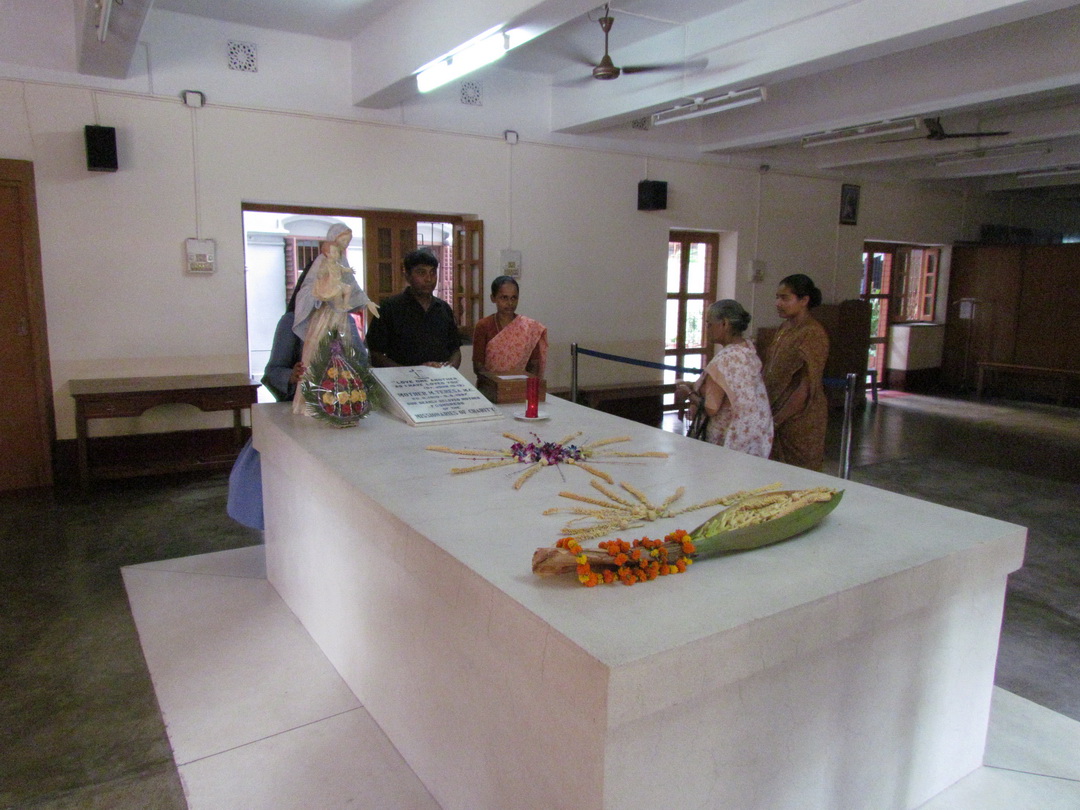
Early on the morning of my motorbike tour of Kolkata, I headed to Rajesh's office. There was a group of people going on the Sunderban trip that morning as well and they were also waiting at the office at 8 o'clock. But no Rajesh. There were five young Indian men who were going on the trip together and they decided to call and find out what was up. The second to last night of the Durga Puja festival was the night before and Rajesh and family had been out until very late partying it up. So it was a bit of a late start for everyone. But Rajesh showed up and the group left on their trip. Shortly thereafter Rajesh's nephew or cousin showed up and I was off on my bike tour. My “guide” (Rajesh didn't like to refer to the motorbike guys as guides since they were just people driving visitors around. And I presume it also took the heat off the “guides” in case they didn't provide enough explanation.) was named Om. He was quite young, but quite friendly. We headed off to the first spot of interest, Mother House. Mother Teresa did her thing in Calcutta. Her mission houses are there. The one that we visited was not the original, but it is the last one where she did her work and it's where she is buried. There is a little museum there as well, but it's closed on Thursdays and, yup, it was Thursday. But it was still a nice place.

The second stop on the tour was to one of the oldest cemeteries in Calcutta. It is also from the colonial period and is home to many of the British dead. And the tombs are ridiculously opulent, as far as I was concerned. Why take up so much space, in a city where not enough people even have four walls and a roof, and make virtual palaces in death? I have never understood that. But then I've never been rich either, and maybe that warps your mind a bit.


We passed through Chinatown and then through some fairly regular streets with regular-looking people doing their regular sorts of things.


Our next actual stop was the garbage mountain. Now I suppose to some this might seem to have been a distasteful sort of stop. It might show how much waste is generated by a city and its people and how much degradation to the environment goes on because of human activity. And I suppose that is true to some extent. But then Om started telling me about other things about this particular garbage mountain. Fifty thousand people work around this thing. And on it, and in it and over it. There are those who do the spreading of the garbage and all of that, naturally. But there are also many people who are combing through the garbage as it comes and is dumped. They search for things of value, from recyclables that can be turned in for money to broken things that can be restored and used or sold. All the people who do that are allowed to come and go freely. They don't have to buy permits. They don't risk jail for trespassing or thievery or anything like that. And they are employed. And the bits of the garbage mountain that would be staying around for thousands and thousands of years are being taken out of the garbage, so that what's left is biodegradable. Then as that stuff breaks down, the city collects the methane and uses it. It's a very eco-friendly seeming operation. On the way to the active mountain, we passed another one that had been finished off. And what struck me was how much vegetation was growing all over it. Nature was reclaiming the garbage and using it and breaking it down.


This is in contrast to a place like Calgary who employs people to do all that sort of stuff and then keeping the money that is made. Anyone who tries to take anything from the city landfills is charged with trespassing and theft and all manner of things to keep them from helping the environment. It's interesting that in the enlightened western world we have governments that block the environmental initiative of citizens, and in this “second-world” country the government actively encourages people to help greenify the earth, and gives people an avenue to make money when other avenues may be closed to them.

From the garbage mountain we made a quick stop at Birla Temple. It is named after one of India's wealthiest families. This family has built a temple in each province of the country, all of them named Birla Temple. I guess it's a form of philanthropy. I thought it looked a lot like Angkor Wat.


From Birla Temple we went to visit the temple that gave Calcutta its name. Another important Hindu god, at least in northern India is Kali. The most important temple in the area is a temple dedicated to the goddess Kali. It is called Kalighat, and from that came the eventual pronunciation of Calcutta. Photos of the goddess are not allowed, so once inside, I was not allowed to use my camera. But because of the festival, there were gazillions of people. And we arrived just after a goat was apparently sacrificed to the goddess. I guess that happens every day. It was bit gruesome looking at the altar, seeing the blood and knowing what happened there. But that's the way it works here.


Outside the temple of Kali, is the first hospital that Mother Teresa operated. It is currently being renovated for new use as a hospital of some sort.


A quick drive by the Victoria Monument and we were off across the river over the new Howrah Bridge. This is not the one that forbids photography.
On the other side of the river was the botanical garden. I wish we had had more time to just wander around the garden. It was quite peaceful. However, our reason for going was to see the world's largest banyan tree. Although its age can't be precisely determined, it is at least 250 years old. And it covers an area of some 1.5 hectares. The way it works is that the central trunk put out shoots that grow out horizontally through the air and then, when the branch becomes too heavy, the shoots go to ground and put down more roots. This new trunk sends out more shoot branches and the process repeats. This has the effect of spreading the banyan tree out in area. Banyan trees that I have seen in the past are all very dense in the central trunk area, but this one is very spread out. And then I found out why. The Kolkata government, in an effort to have this world record tree, is helping it. They are holding up the shoot branches with bamboo poles. This allows the shoots to go farther out and make the area covered by the tree grow that much faster. And it also makes the trunks of the banyan more spread out and sparse. In essence, they are cheating, but Om didn't understand when I told him that. He probably wouldn't have appreciated it either, so it's just as well. But cheating or not, it's still an impressive tree. It took about ten minutes to walk around it.


Suitably impressed, it was time to continue on to the old Howrah Bridge, where photos are forbidden. Along the way we passed the end of one of the Durga idols. At the end of the festival, all the idols, which are made of mud, are taken to the river and then set afloat. As they float away, the mud melts and the idol slowly melts away.

We crossed the old Howrah Bridge and then Om took me down below and showed me why photos are forbidden. From beneath it is a strange sight. As you may note, there are no pylons that hold the bridge up from below. It is apparently an engineering marvel erected by the British. One day, for one of the Durga Puja festivals, one enterprising sort made a shrine that was a replica of the bridge. And the government apparently realized that if one person could do it, then somebody else could make a model of the bridge as well. Or some other country could make a bridge just like the old Howrah Bridge. It would cease to be unique and special and Calcutta would lose some prestige. So the government banned photos on the bridge so that nobody would be able to duplicate the bridge for some other country. I don't know how it helps since you can freely take photos when not on the bridge. What I do think is that that's just a ridiculous reason.

This day, I also got to see the flower market below the bridge up close. We wandered through it and Om showed me which flowers were for which purpose. It was quite the operation going on down there, and I was amazed.


Just down the street from the flower market were a couple of crematoriums. In Hindu ritual, the body is reduced to ashes and then is buried. If there is a holy river nearby, like the Ganges, then the ashes are spread in the river. Other locales have different sites. We didn't go into the first crematorium. It is an electrically powered crematorium and reduces the body to ashes in about 45 minutes. It is government sponsored and costs about 500 rupees, I was told. The second crematorium is wood powered. A pit holds the wood and the body and takes several hours to do its work. The cost is borne by the family with no help from the government and so it costs a lot more as it requires 50 or 60 kilograms of wood. When I took my photo, I angered someone in the place, who cussed me out. I guess there was a body being cremated nearby and he thought it was inappropriate.


As I have noted, I had arrived in Kolkata at the start of a festival for a goddess called Durga. This day was the last day of the festival and the mud idols in the shrines all around the city were to be taken to the river and reduced back to the mud from which they were made.

Om next took me to the area where the idols are made. In an area approximately of 4 to 6 blocks, there is shop after shop of artisan shops where mud idols are made. A few days following the end of the Durga festival another festival will begin. It is for a goddess called Lackay (but that may be a bad spelling), and there will be a need for many idols for the shrines for her. So the shops were producing many mud idols of this new goddess. She was recognizable by her companion, an owl that conveys her from place to place when she needs to travel. There were also a bunch of mud idols for Kali, who stands atop a sleeping Shiva. It was a very interesting area to walk around in and look at all the shops and all the mud idols in the process of manufacture. What surprised me was how uniform they all were, despite being all made by hand and not machine.


Just outside the mud idol area there was a shrine to Durga that I took the time to go and visit. It was really elaborate. There is actually a contest for the best shrine every year. I suspect this one must have been in the running.


Our final stop of the day was a drive through the narrow and winding streets of Kolkata's red light district. It was all rather sordid and sad, not like the ones you would see in Bangkok or the fabled Amsterdam. But Om wouldn't let me take any photos in there, so you will have to imagine it for yourself.

Then it was back to the office, but we were forced to wait a moment as we encountered a goat jam. It had been a very nice day and I enjoyed it a lot.


But my day wasn't quite complete. Rajesh told me how to find the spot where many of the Durga idols would be put into the river. So when the sun had set, I set out to find the spot. It was a media event with news crews all over the place. But there were also fences and police keeping people from getting too close, so I wasn't able to get close enough to see the idols being placed in the water. It was nevertheless a festive atmosphere with people making lots of noise and parading the idols around and dancing and making a great fuss over the end of the Durga festival for this year.


In the end I headed back to the hotel and got ready for my trip to Sundarban Tiger Reserve the next morning. It had been a successful day, in my opinion.